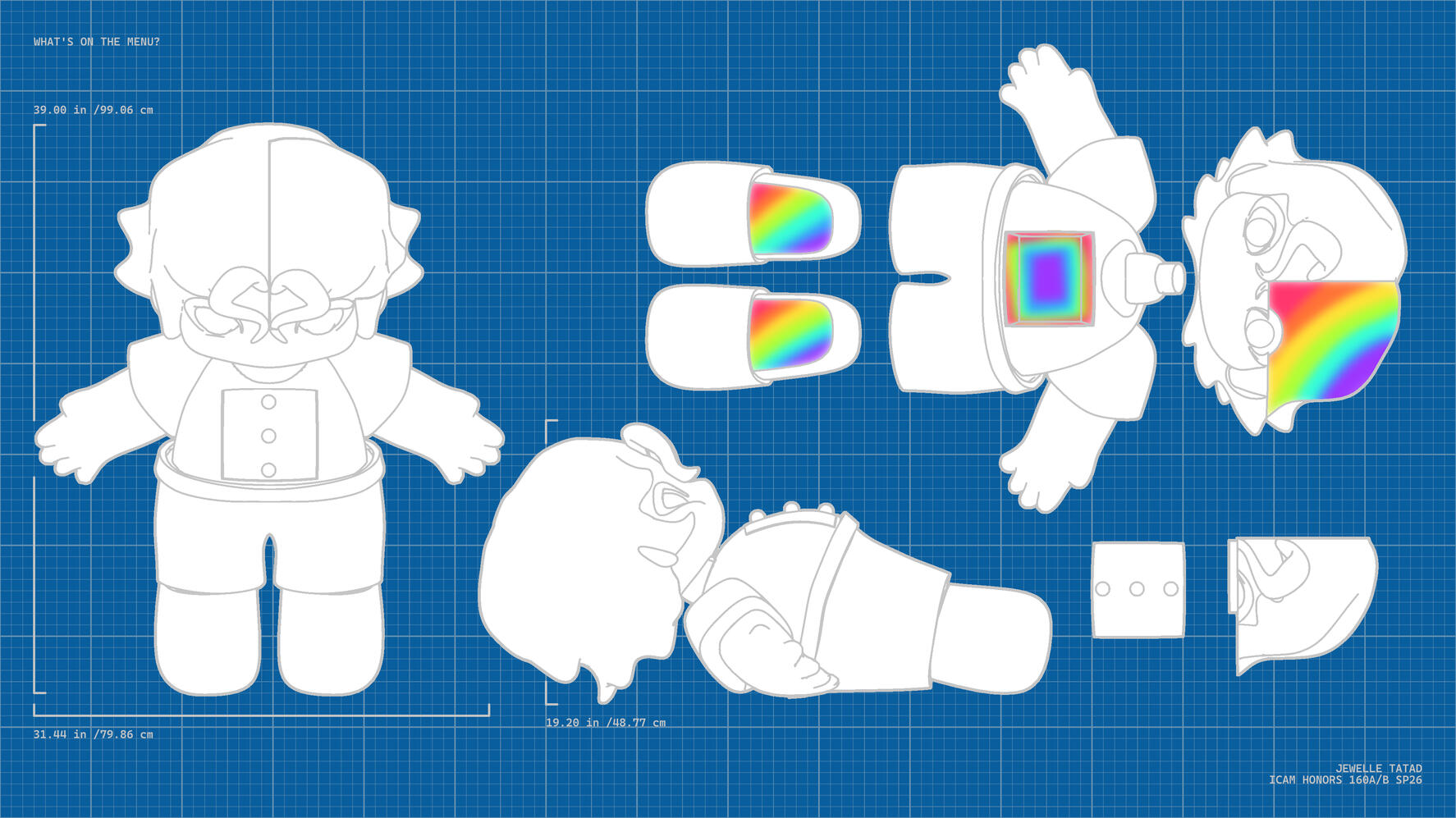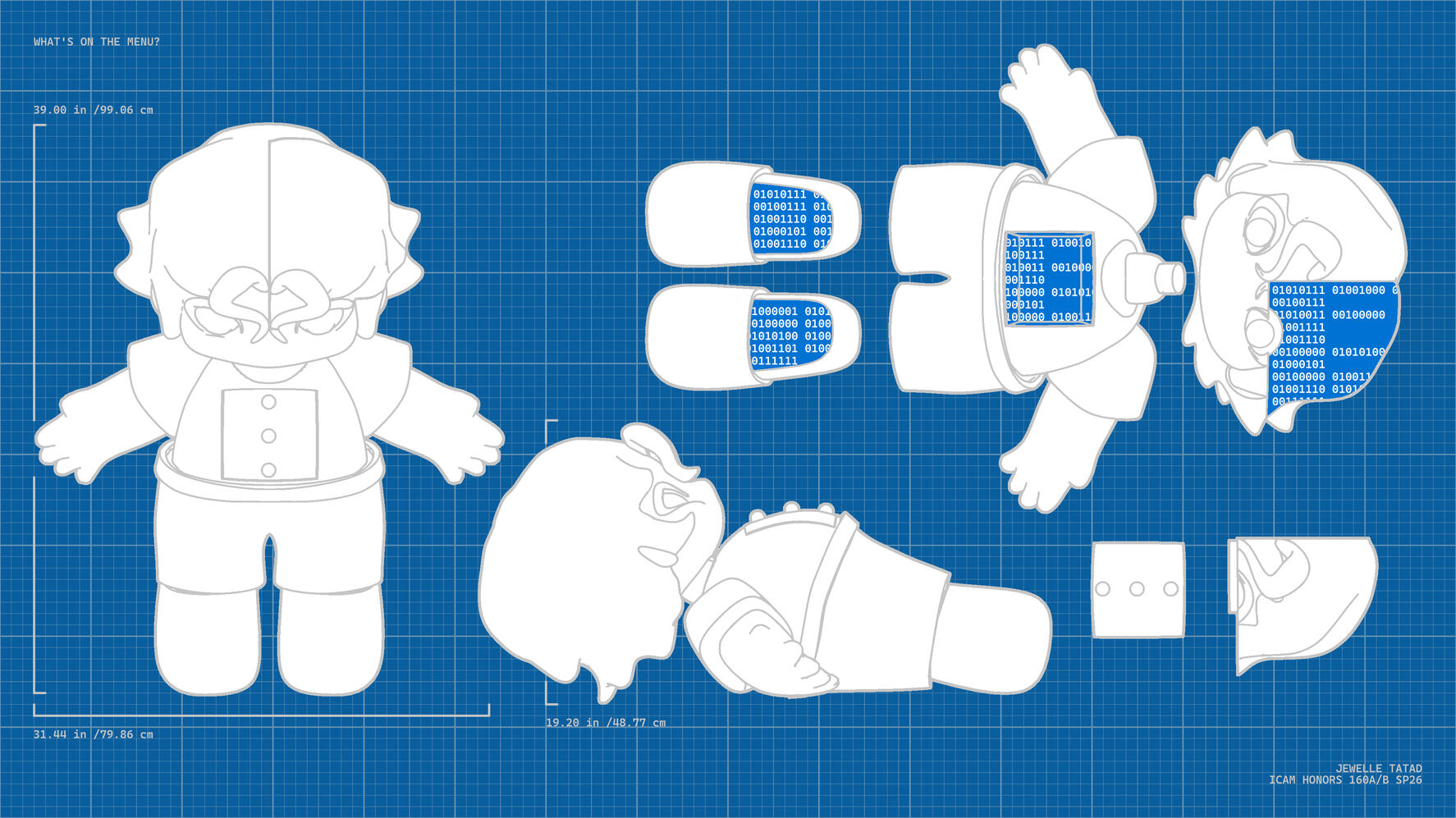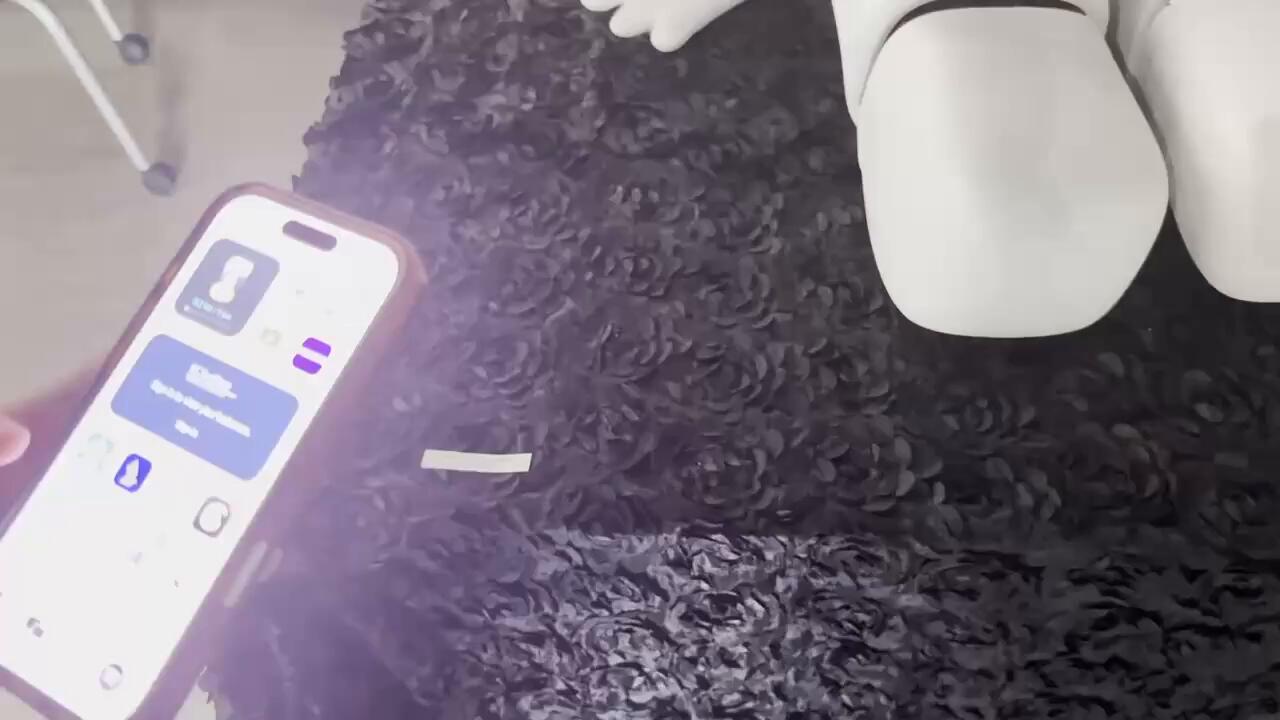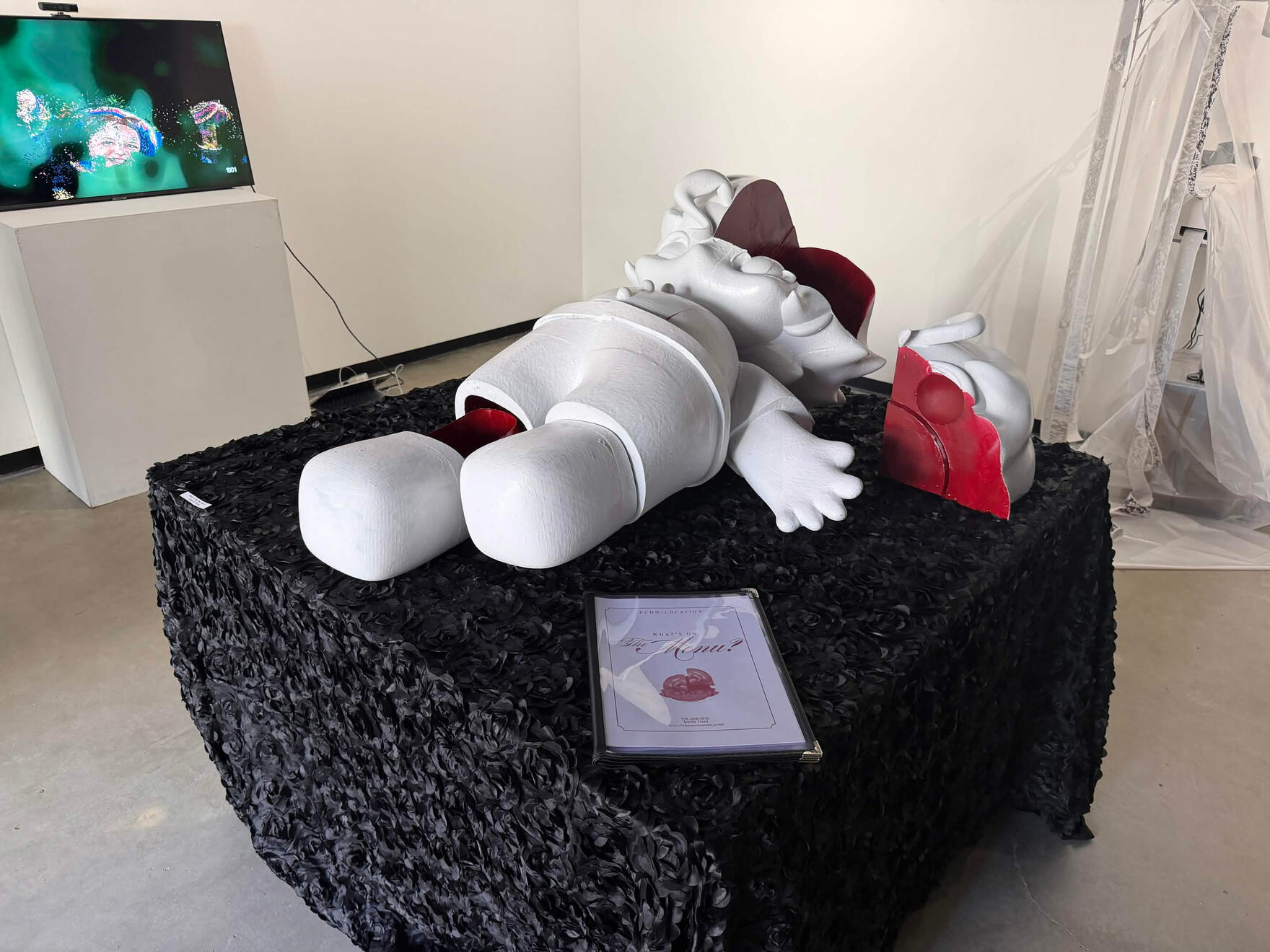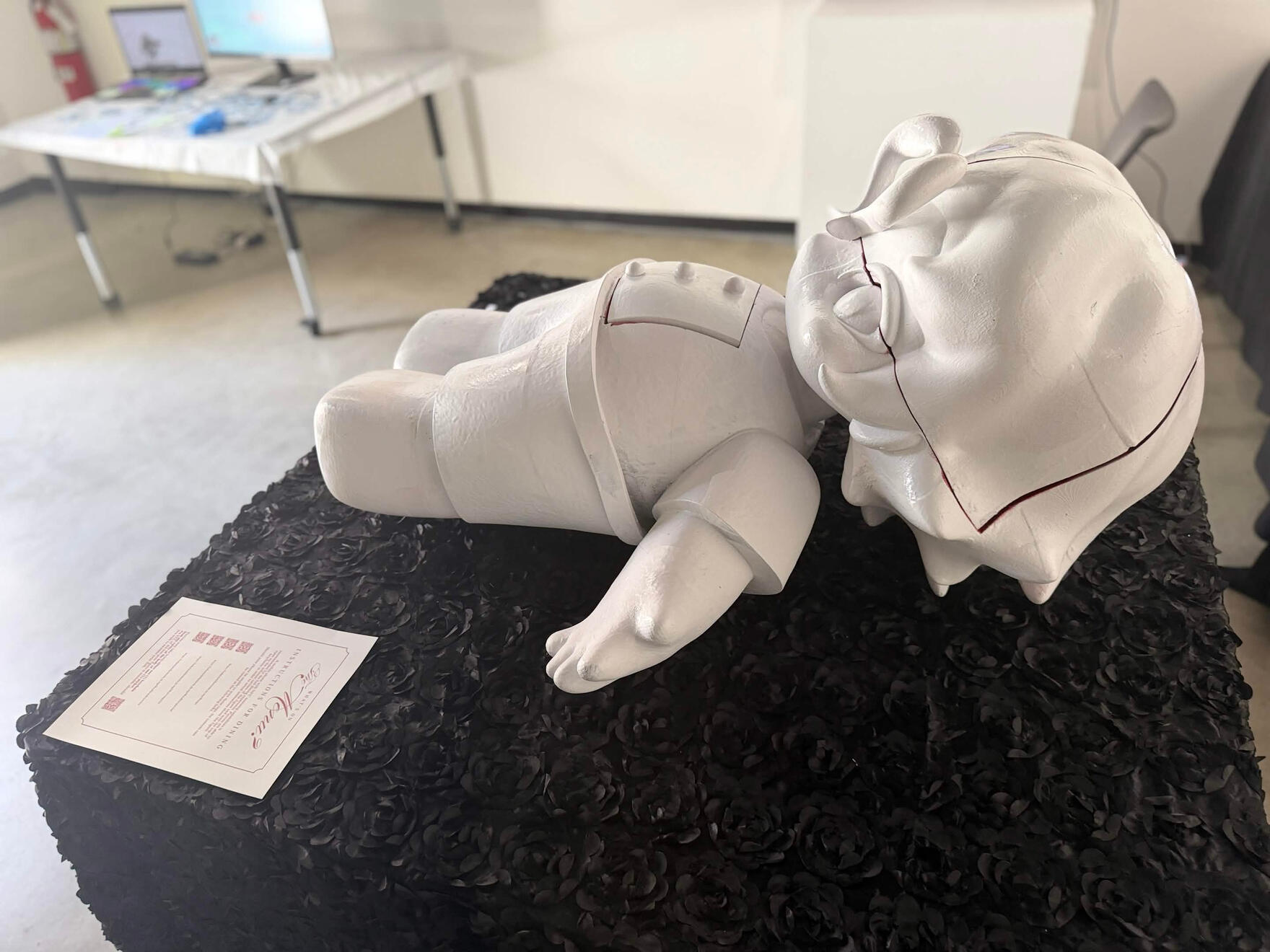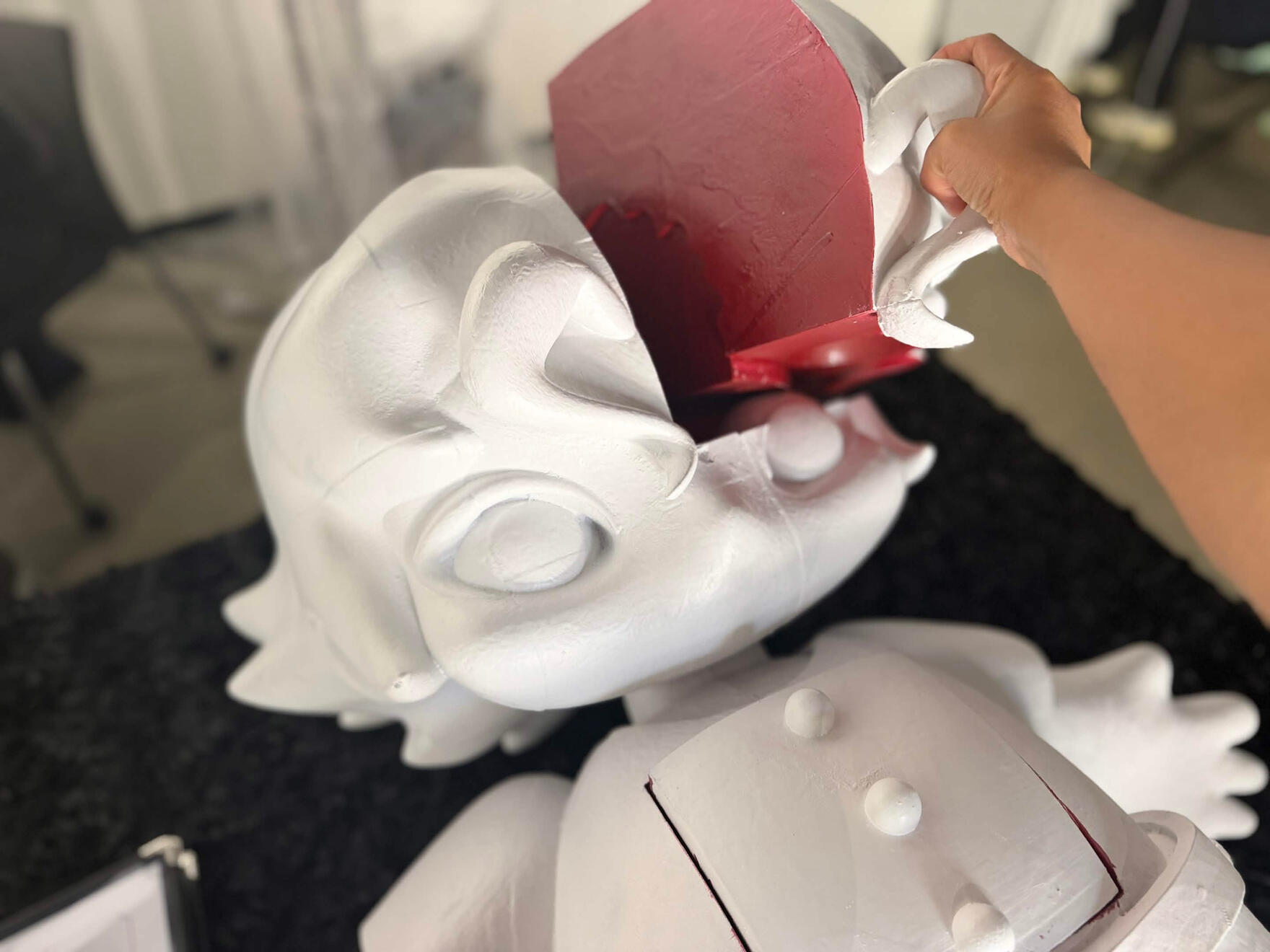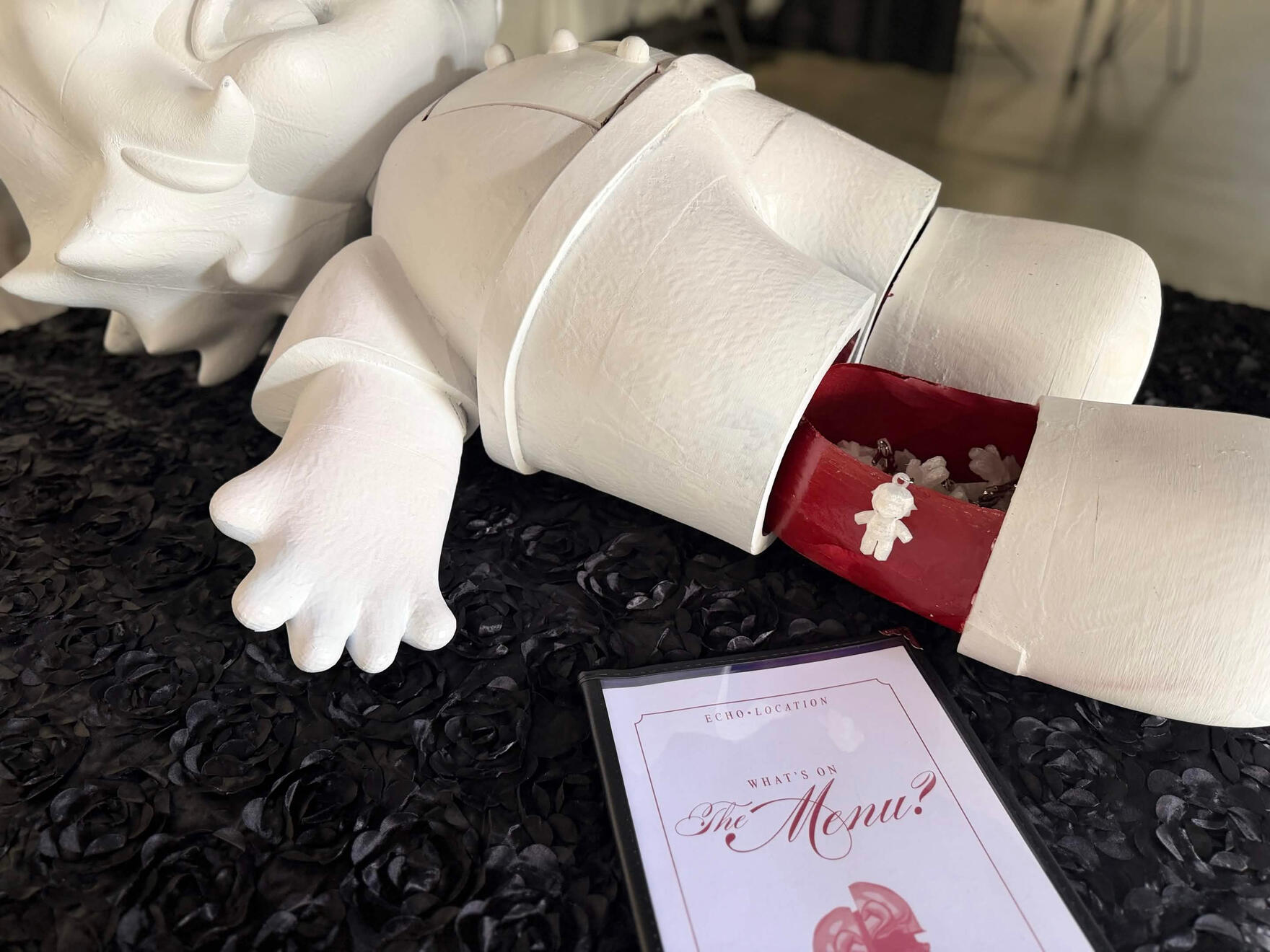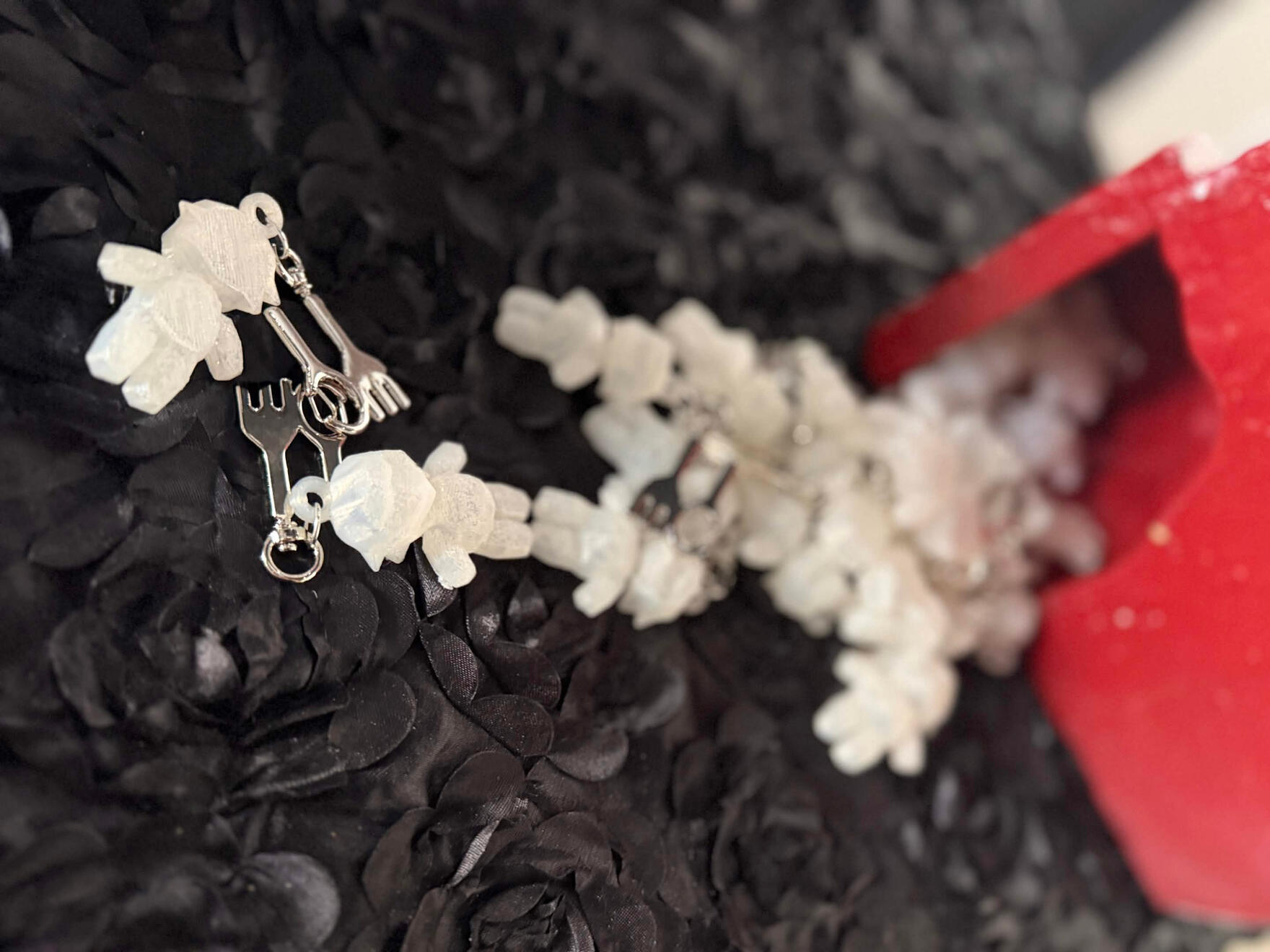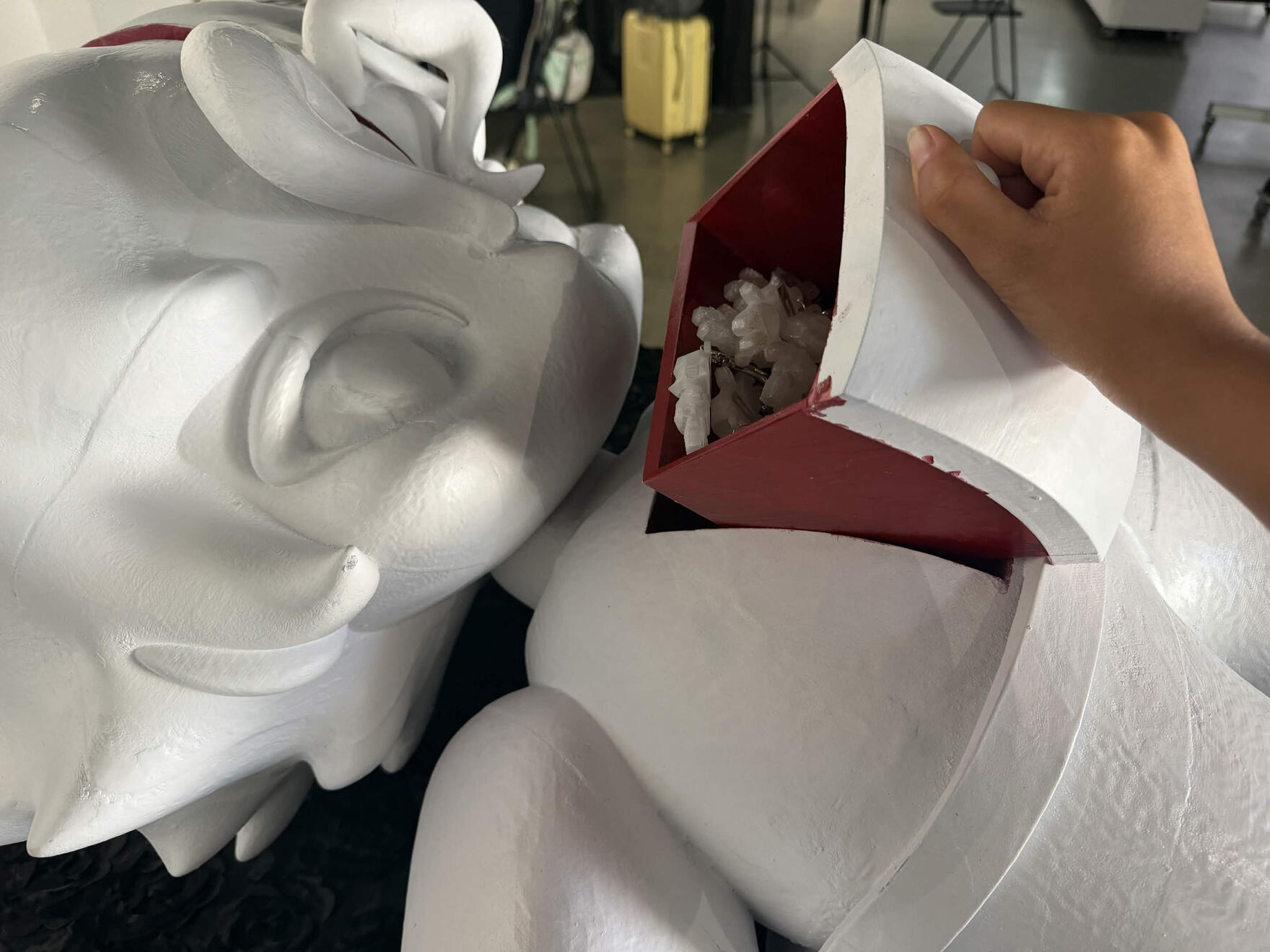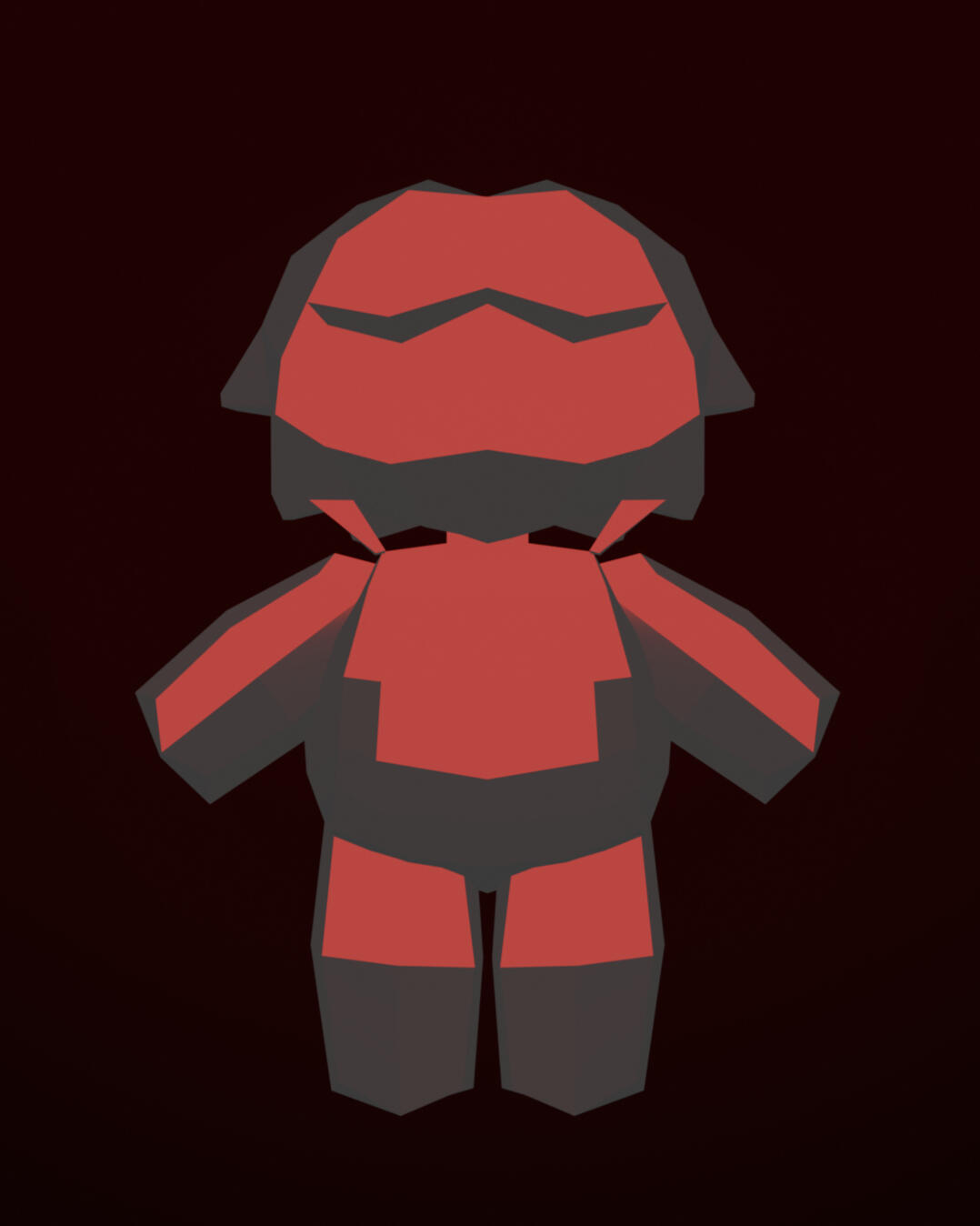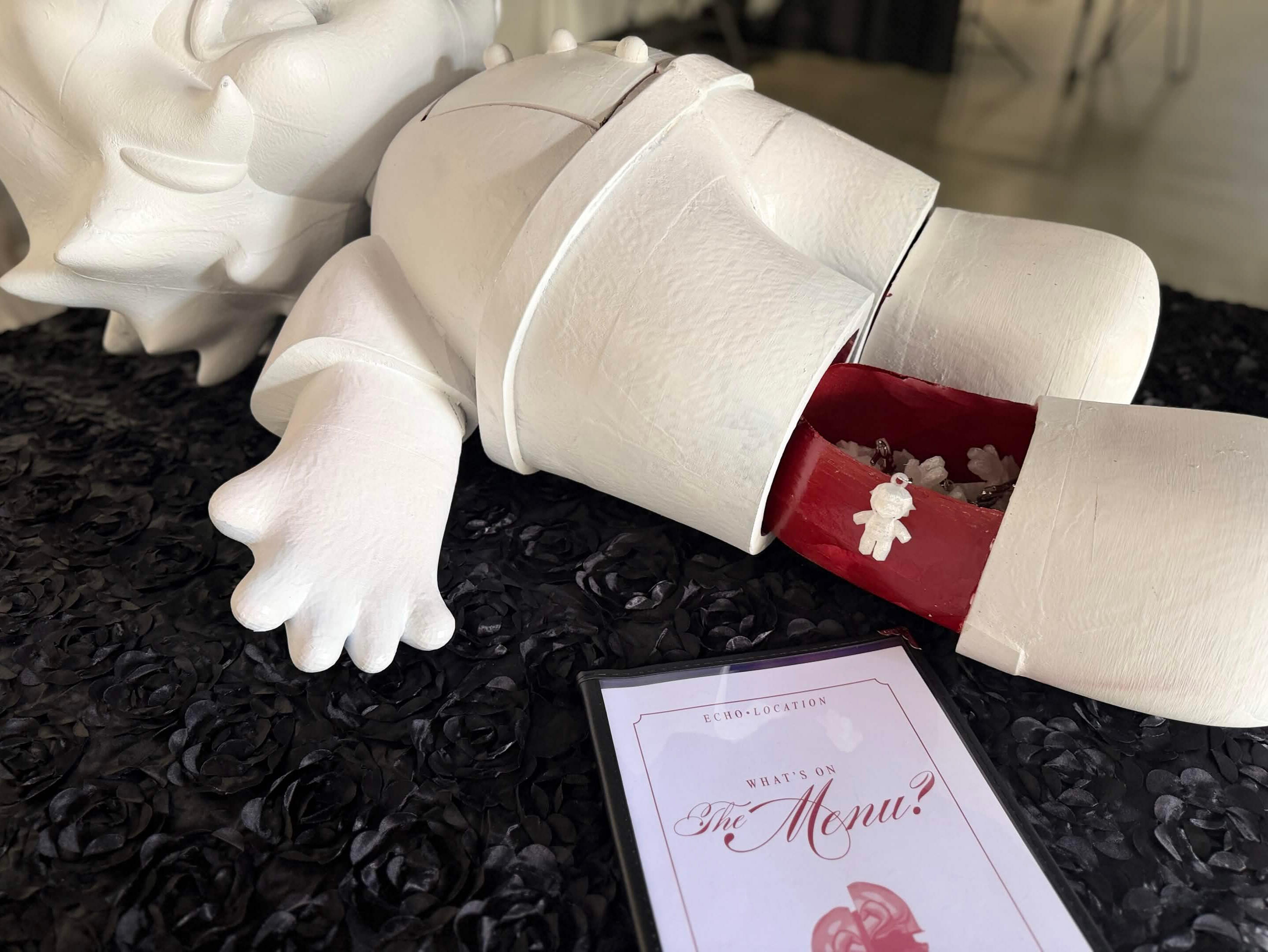
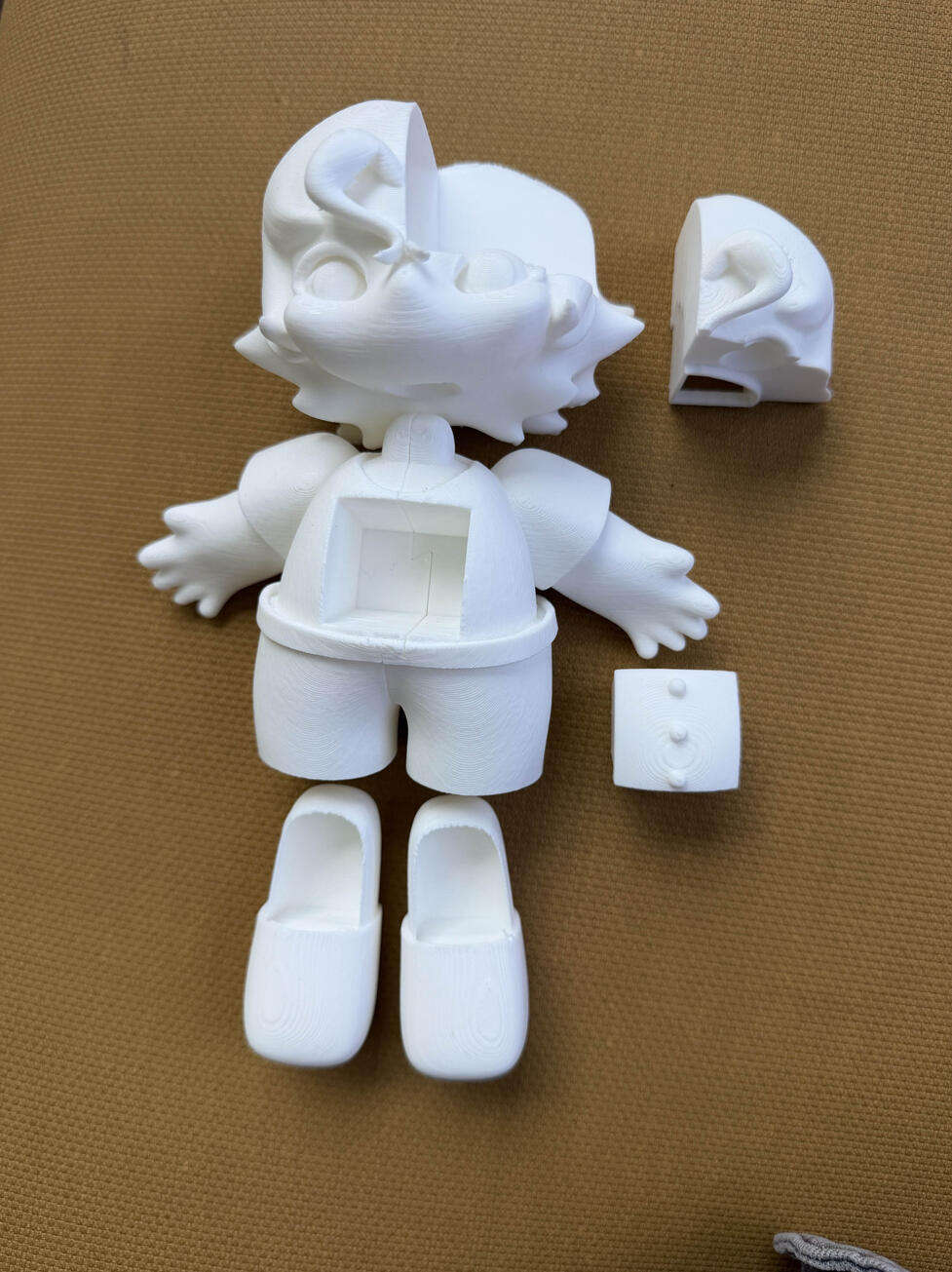
"WHAT'S ON THE MENU?" is a joint 3D printed sculpture and digital experience. Audience members take pieces out of the humanoid figure to peer inside different cavities of the body. Smaller, low poly keychain versions are inside of these cavities, which have NFC chips and can be scanned using a personal smartphone. When scanned, these chips pull up different animations, revealing a bit about this humanoid figure."WHAT'S ON THE MENU?" was exhibited as a part of the ICAM (Interdisciplinary Computing and the Arts major) Honors showcase from June 9th to June 12th, 2026 at the Kamil Gallery located on the UC San Diego Campus. While the media from this exhibition is meant to be scanned from physical keychains, you can navigate to each of the four webpages they are hosted on below.
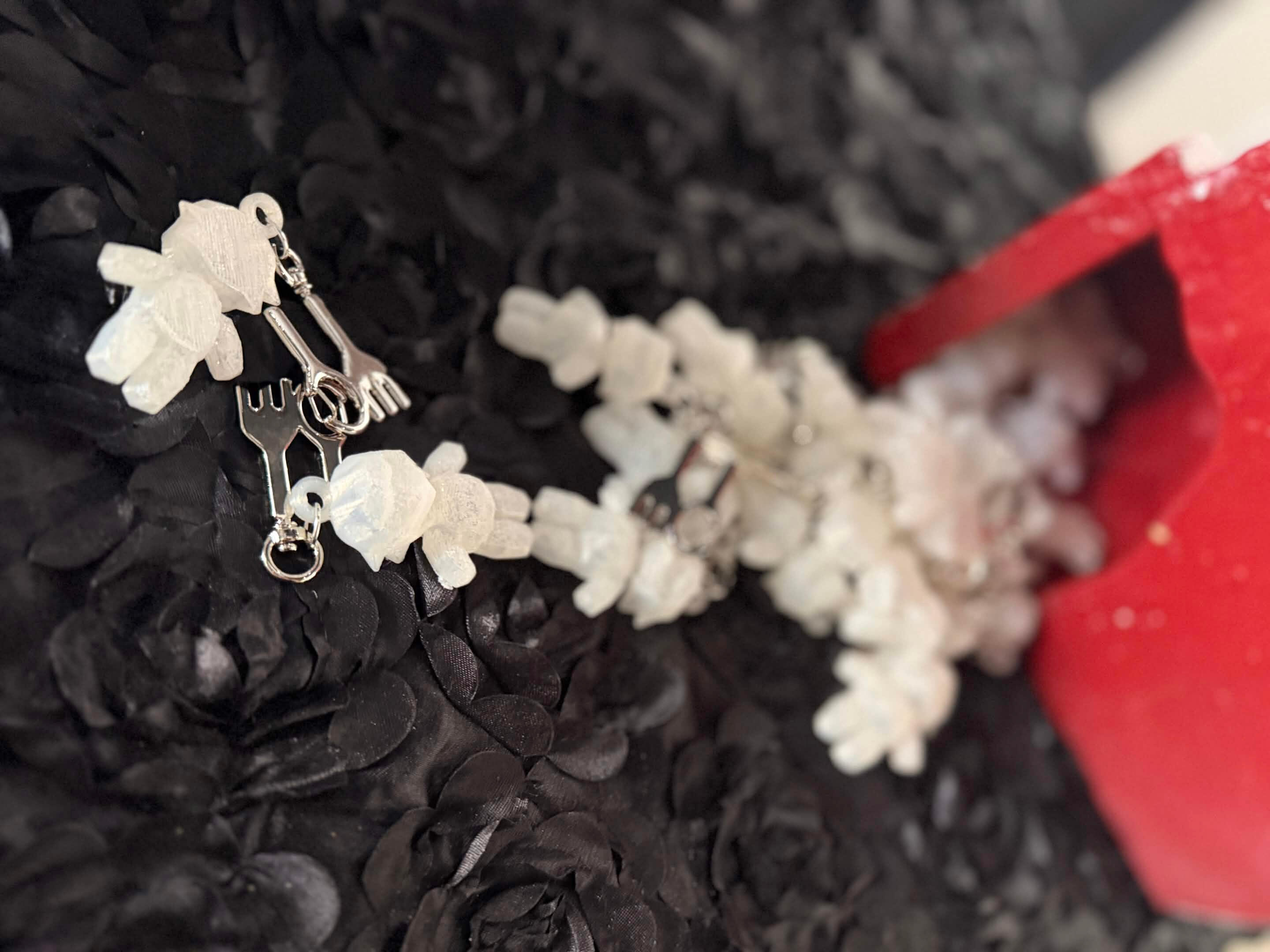
Through the lens of blind box art toys, I conceptualized "WHAT'S ON THE MENU?", an interactive 3D fabricated art toy that borrows from the structure of these toys. Different models are housed within a large 3D printed figure, telling an overarching narrative that can further be
explored through scanning NFC tags housed in different parts of the larger 3D printed figure. Though many art toys and even my own merchandise
is manufactured in factories overseas, I wanted to be able to create this piece by hand and as locally as possible, without sending off the entire piece or pieces to a factory. "WHAT'S ON THE MENU?" takes the form of a humanoid figure on a place, and audience members are encouraged to take this figure apart, examine and scan smaller keychains inside for a deeper look into this figure's story. By presenting the idea of consumption
culture as an investigation, an invasion into this character's life, I aim to bring a more critical lens to the ways in which we consume media, participate in this capitalist culture, and overall encourage a more thoughtful way of creating and consuming products."WHAT'S ON THE MENU?" was exhibited to a live audience from June 9th to June 12th, 2026 at the Kamil Gallery as a part of the ICAM Honors Showcase ECHO•location. Students faculty, and community members came in throughout the week in order to view the piece, and were encouraged to take keychains as a part of the exhibit. A menu was displayed next to the piece explaining the methodology as well as instructions for how to interact with the piece. By the end of the reception on the first day, there were no keychains left, so more keychains had to be printed in order to be used throughout open gallery hours.Reflecting back on this, I wonder how many audience members will think about this piece past the keychains now that the exhibition is over. Many people in the UC San Diego and perhaps even north San Diego area now have a little piece of "WHAT'S ON THE MENU?" with them, connected by an NFC sticker that goes to different animations. I think it speaks to a sense of connection we as humans aim to have when it comes to capitalism;
as a merchandise designer myself, I have been able to connect with so many people, but when that sort of connection becomes what's on the menu, how can we as consumers and creators be more responsible for the curation of the content and merchandise we do consume?I do not foresee the world that "WHAT'S ON THE MENU?" was created in going away anytime soon, but I believe through engaging critically in the media we consume, thinking about the sustainability and practicing good financial literacy, maybe that world can be shifted in a way that is more thoughtful about the art we consume.

Final Color Scheme
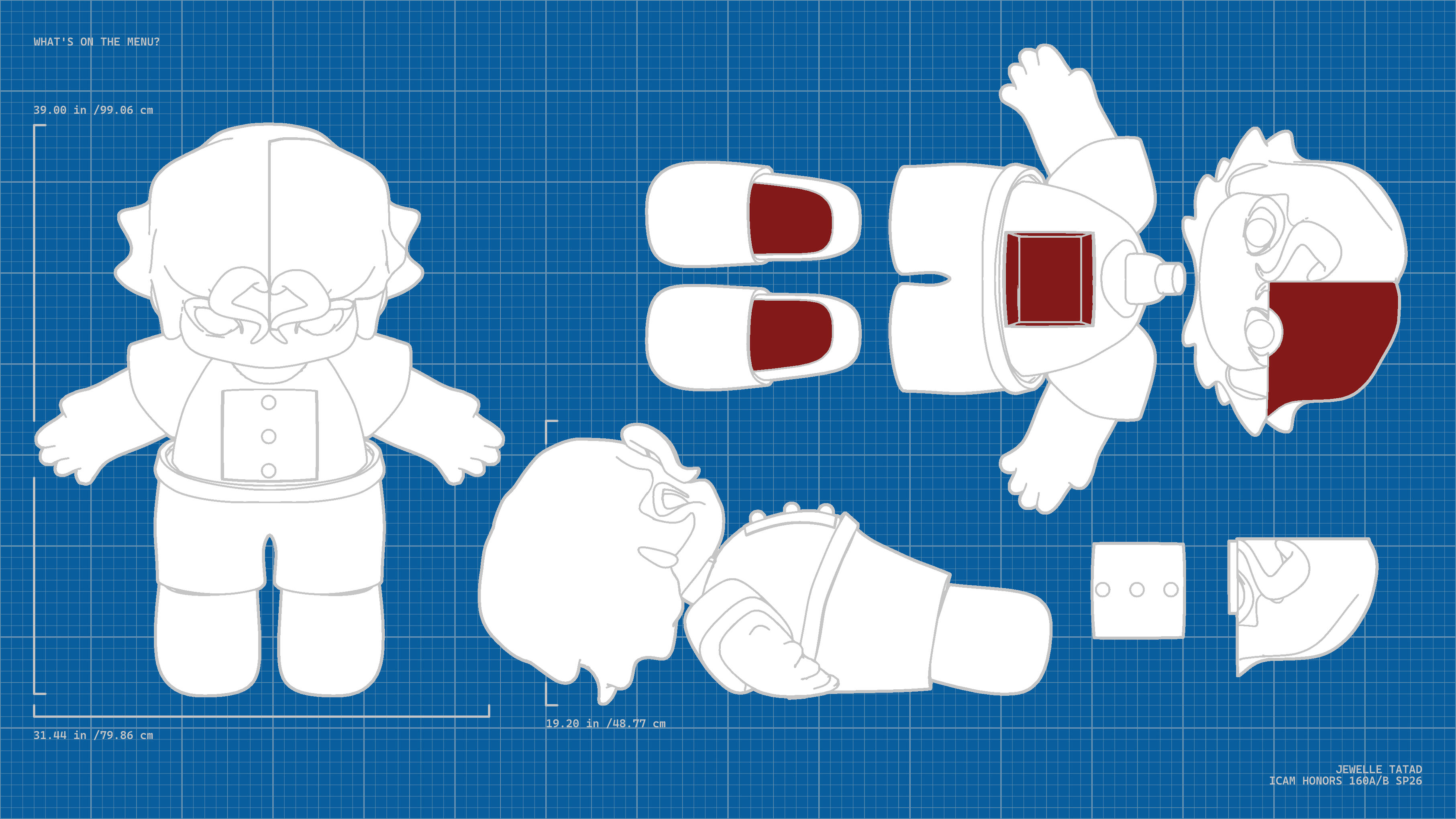
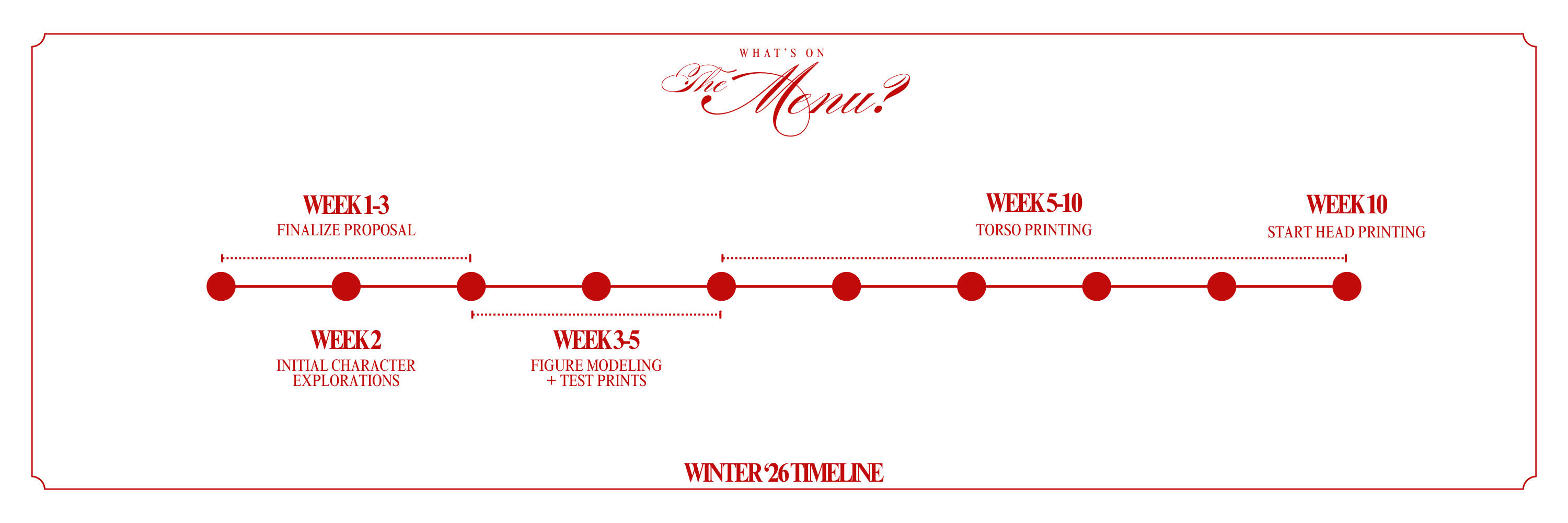
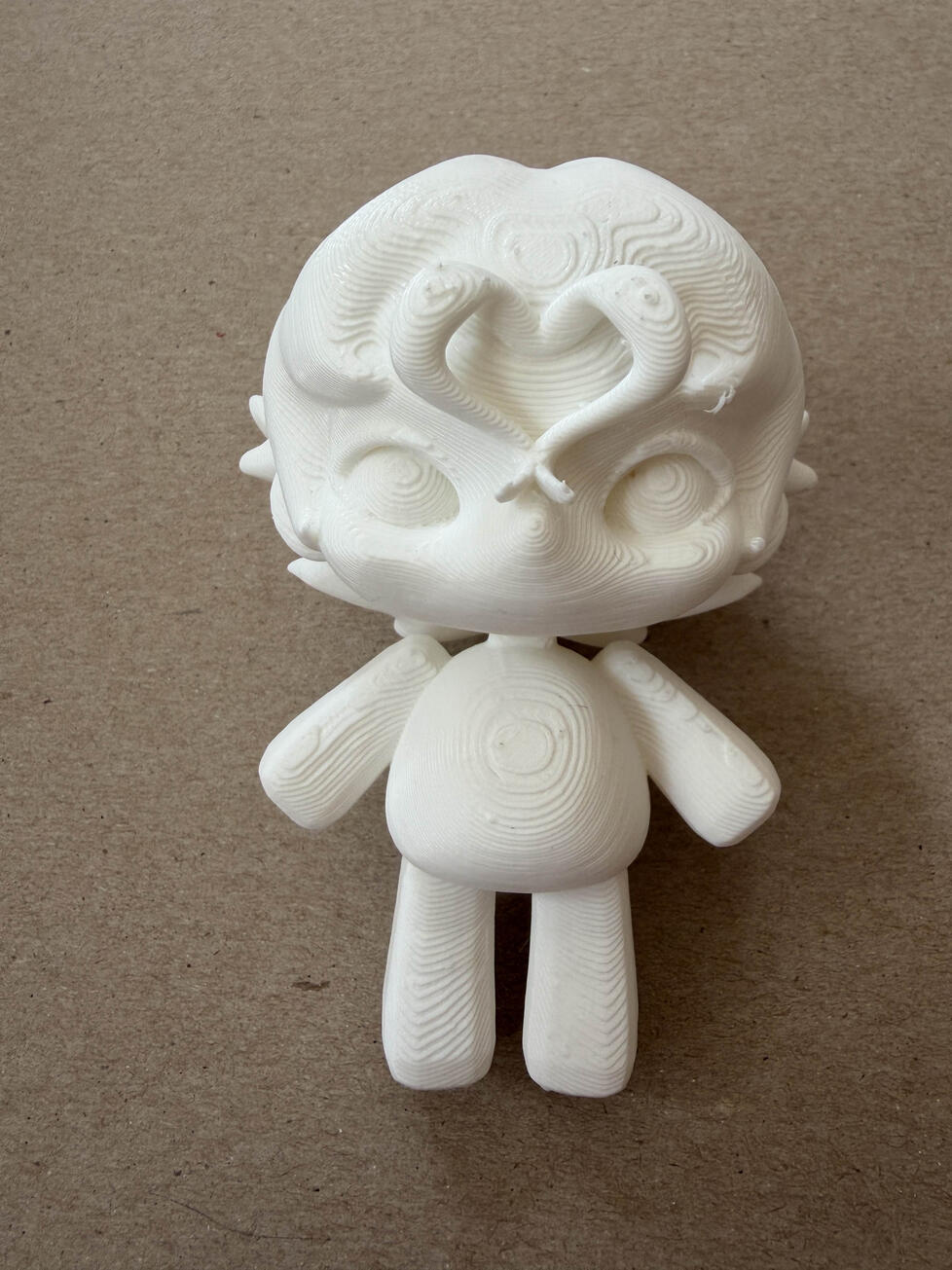
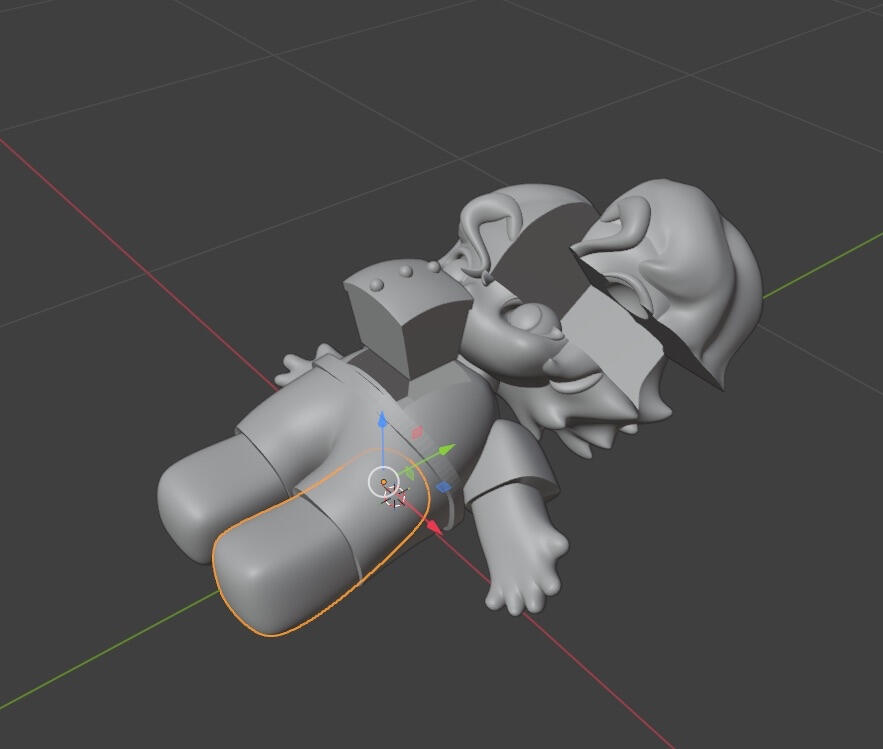
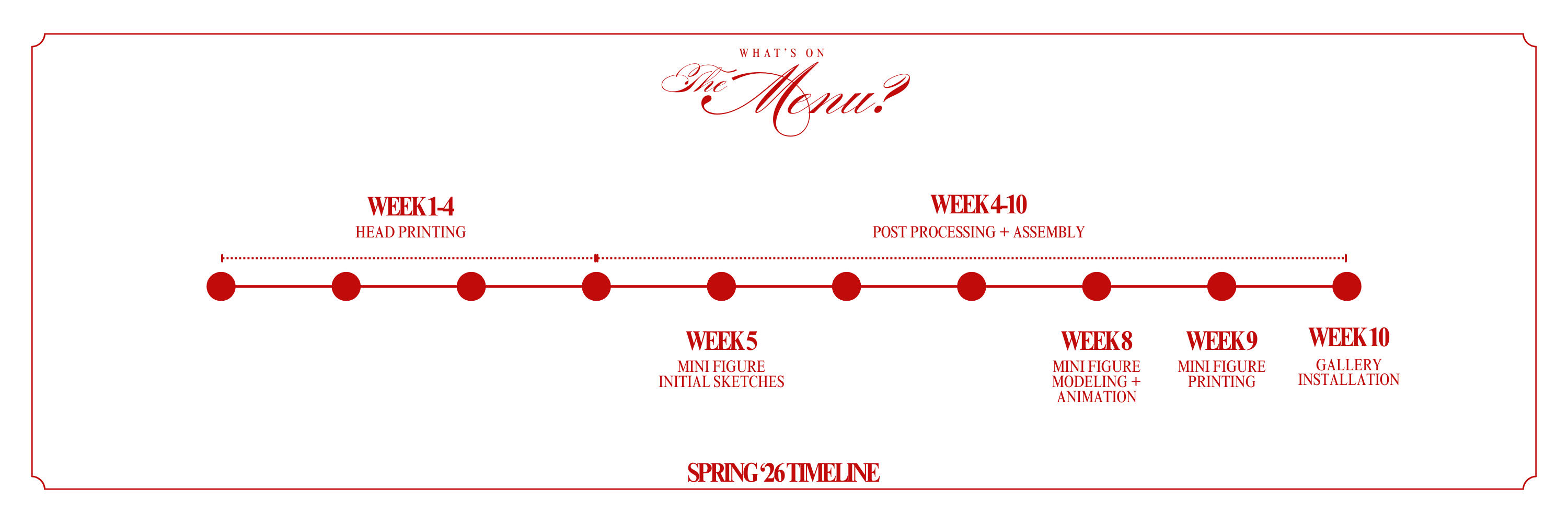
"WHAT'S ON THE MENU?"'s main figure and smaller keychain version was digitally sculpted and modeled in Blender over the course of three weeks. All parts were printed on Prusa MK3S+, both located in the DIB (Design and Innovation Building) makerspace on the UC San Diego Campus as well as a personal printer lent to me by a friend. Overture PLA and Jessie PLA were used. Test prints + a small prototype were printed prior to the actual printing in order to check the design and tolerances.

Initial Test Design

Final Figure

Finalized Prototype
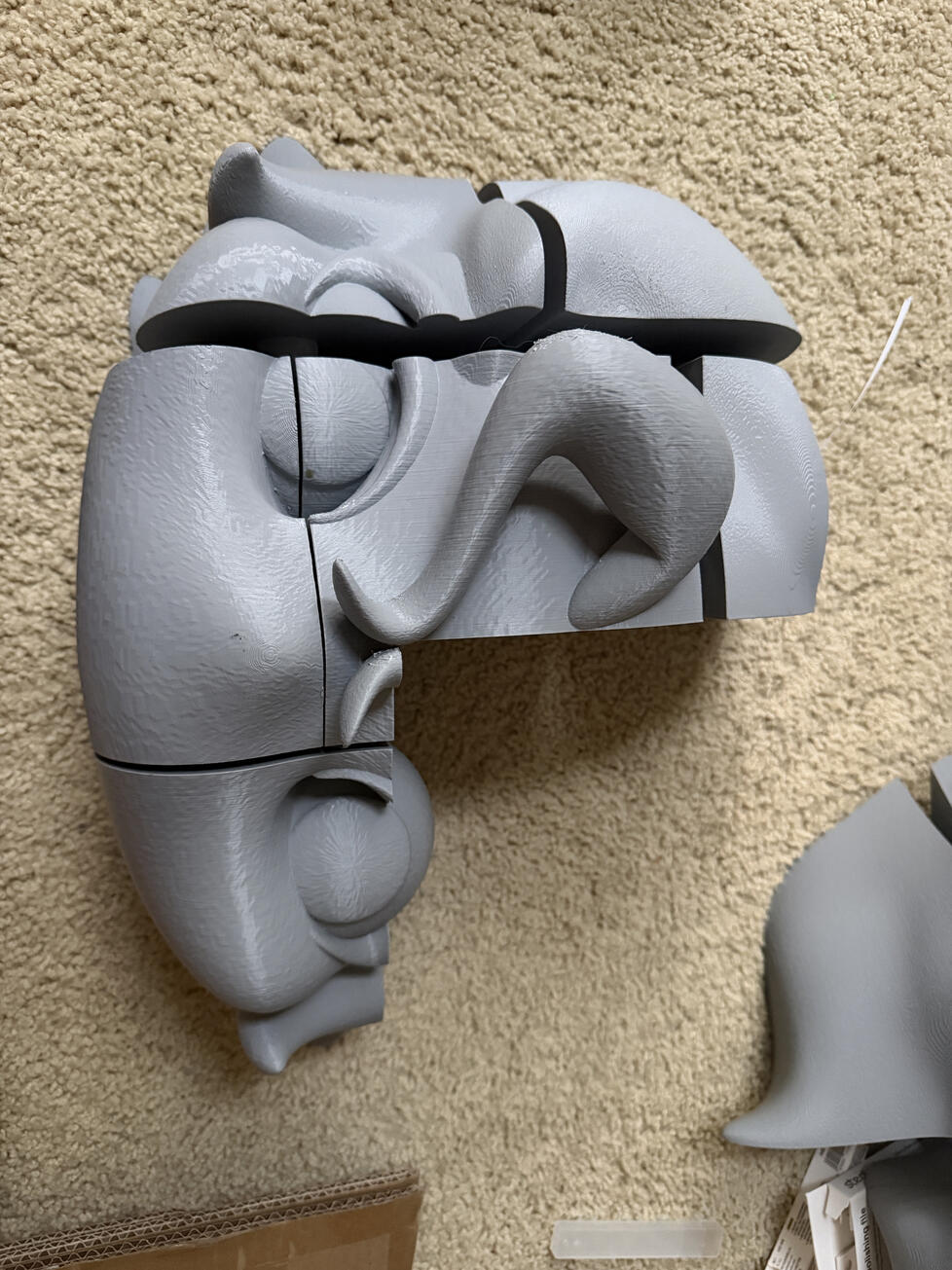
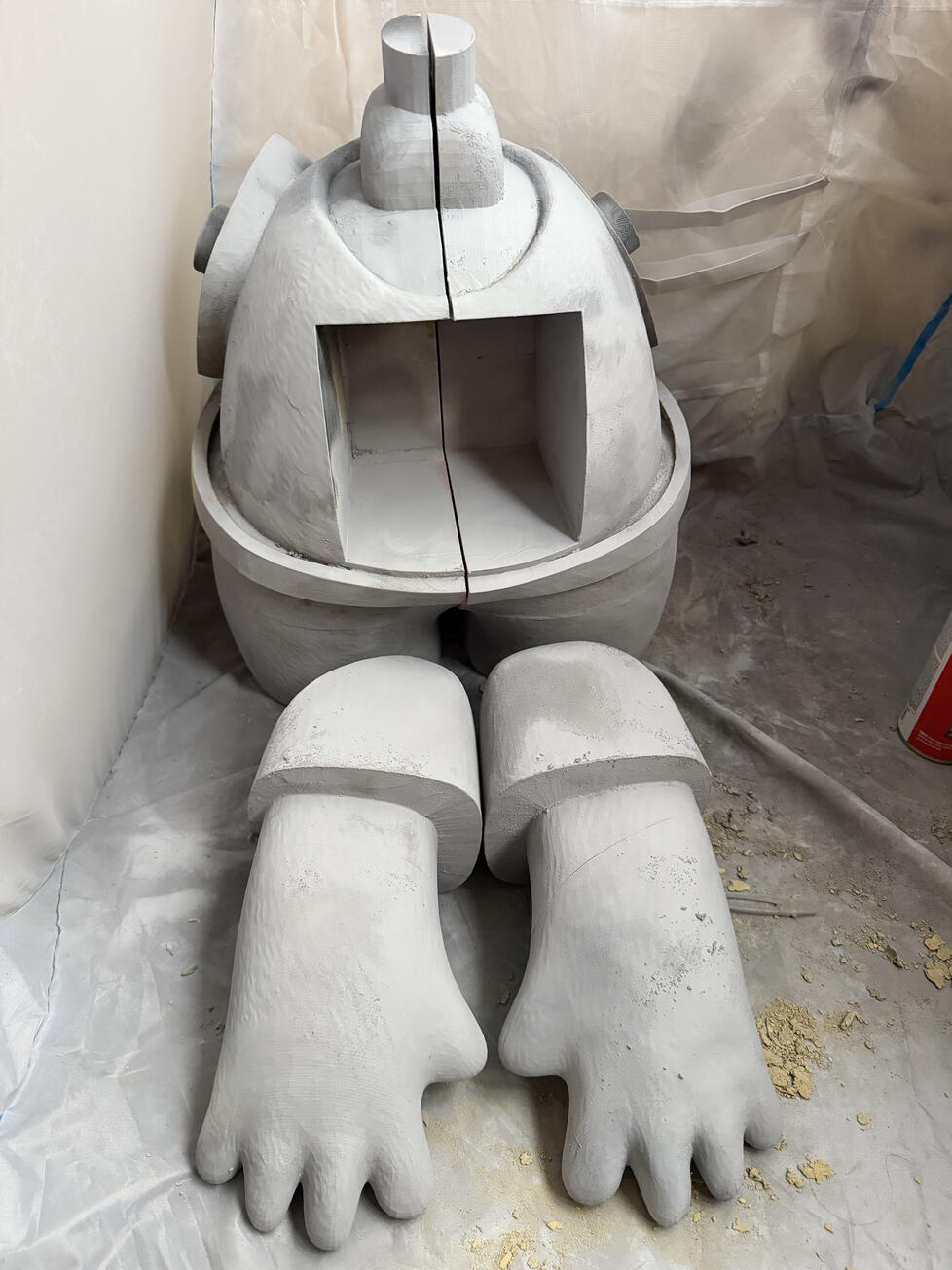
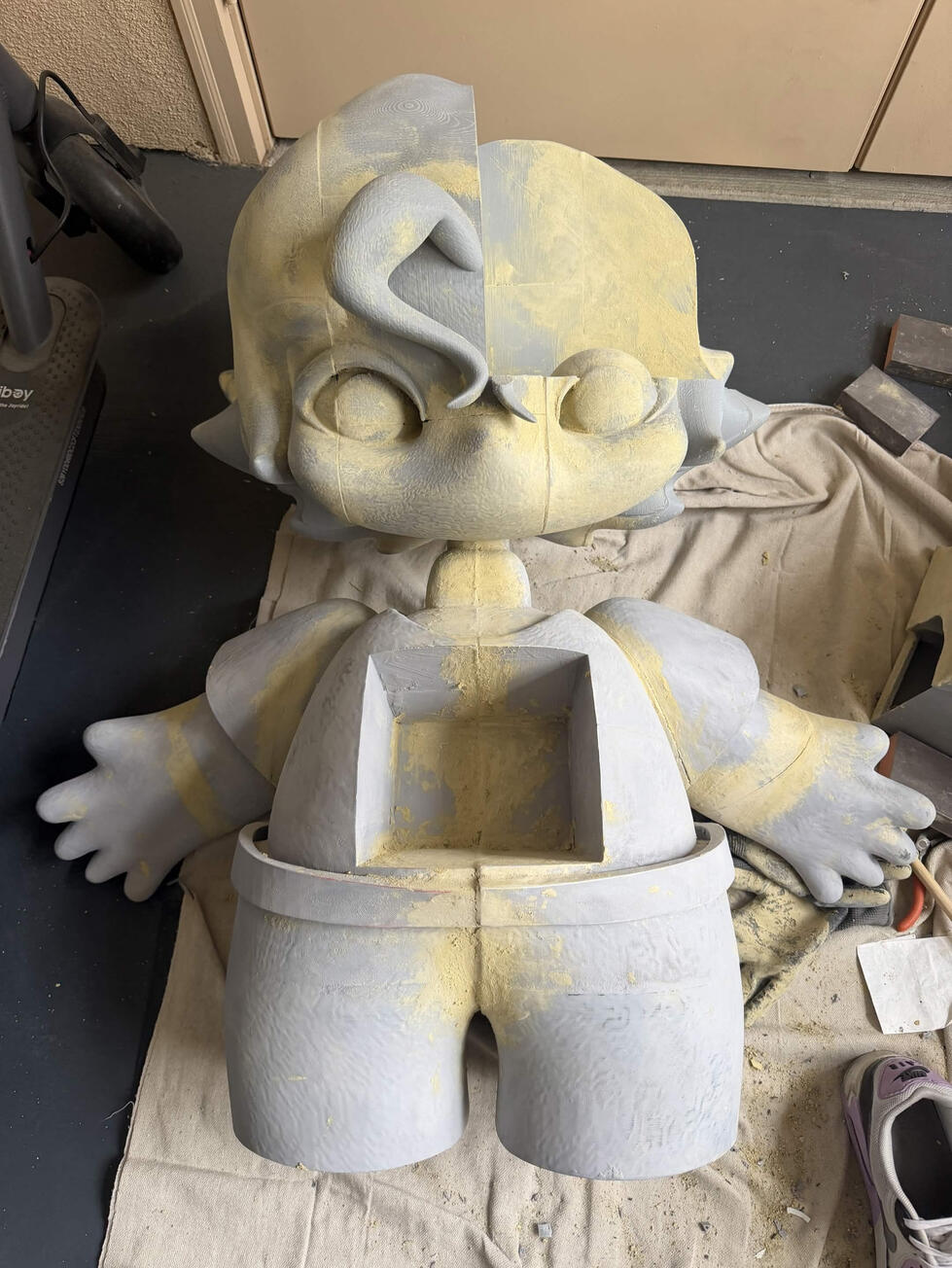
The figure was sanded and primed with 3M wood filler and Rustoleum Automotive primer. It was finished with Rustoleum Matte White, Gloss Colonial Red, and Colorshot Pixie Dust over the course of 6 weeks. The full sculpture measures 3.25ft long x 2.62 ft wide x 1.65 ft tall.

Head Pieces

Primed Torso and Arms

Assembly

Alt. Color Scheme 1

Alt. Color Scheme 2